
 English
Beyond Aid: A Case Study of Youth-Led Social Entrepreneurship, Agency, and Dignity through Kikobana
- Authors:Jayden Kim(BC Collegiate, Seoul, South Korea )
- Publication Date:August 31, 2026
- Type:IJCSY Vol.1 No.2
- DOI:https://doi.org/10.23410/IJCSY.2026.1.2.03
- Volume/Issue:1/(2)
Abstract
The present paper investigates the phenomenon of youth-led social entrepreneurship as an alternative and complimentary form of development, analyzing the case of Kikobana, an organization of social entrepreneurship in Uganda. Building on the concepts of capability approach, agency, dignity, empowerment, and youth social entrepreneurship, the study discusses how entrepreneurship could bring development further from resource provision to participation and self-reliance. It is shown that Kikobana generates several forms of agency at once. Vocational education enables the development of participants’ capability to make, earn money, and participate in the market, whereas the production of school bags turns capabilities into a tangible contribution which can be used to promote recognition, confidence, and self-reliance. The case demonstrates how the young entrepreneur becomes the designer of development through establishing the link between his/her passion for running and social enterprise that involves consumers, producers, and communities in the social value chain. Nevertheless, there are certain limitations associated with the scale, dependency on the market, and ability of economically vulnerable groups to engage. All things considered, development should be not only measured in terms of the resources provided but also in terms of capabilities, agency, participation, and dignity developed and control over economic future acquired.
figures
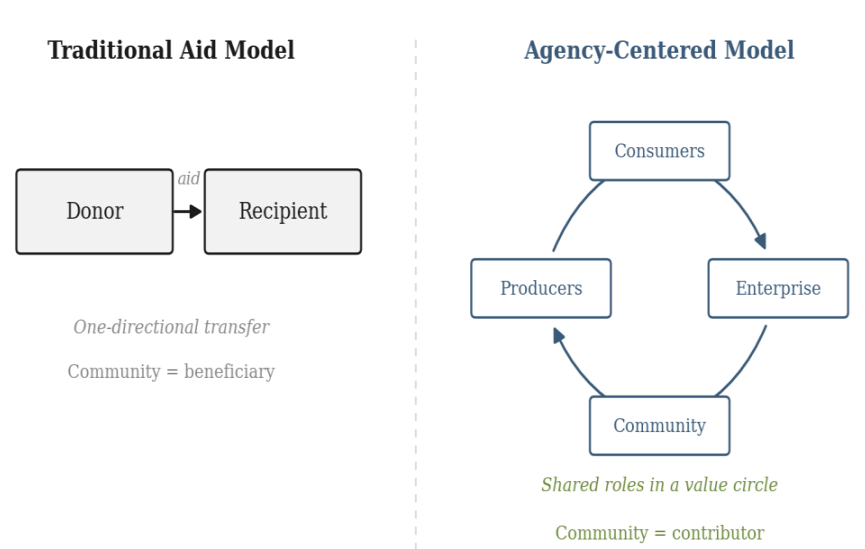
Fig. 0 Traditional Aid Model versus Agency-Centered Development Model
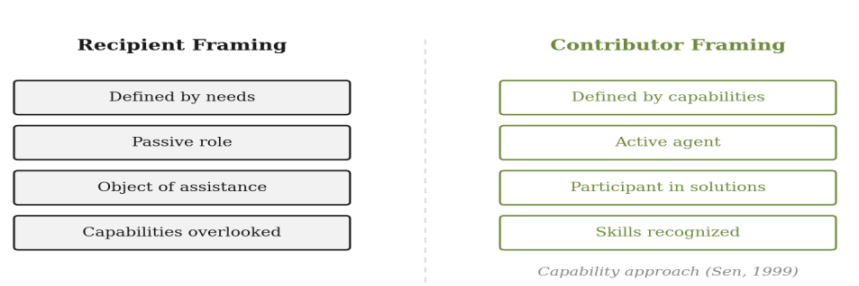
Fig. 1 Recipient Framing versus Contributor Framing in Development Practice
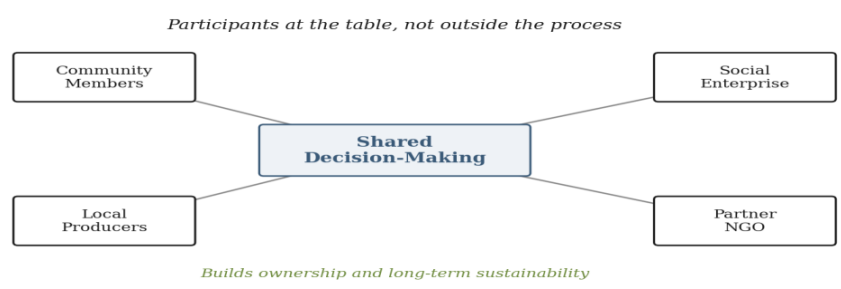
Fig. 2 Participatory Development as Shared Decision-Making
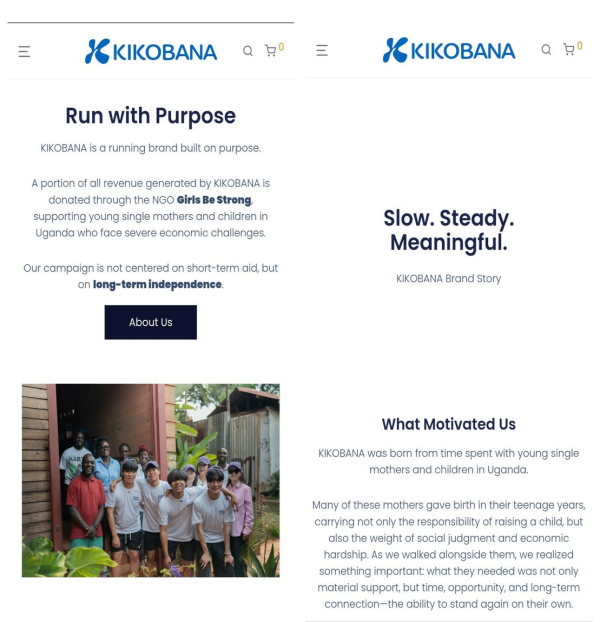
Fig. 3 Kikobana Website Homepage

Fig. 4 Kikobana Products Available in a Physical Store
References
- Adewole, A. A. (2022). Social entrepreneurship as a solution to youth empowerment and socio- economic wellbeing in Africa: Pathway to achieving Africa’s Agenda 2063. People Centred – The Journal of Development Administration, 7(3), 91–99.
- Alkire, S., Mishra, R., Selden, L., & Suppa, N. (2025). The global Multidimensional Poverty Index (MPI) 2025: Country results and methodological note. Oxford Poverty and Human Development Initiative, University of Oxford.
- Alzate, P., Mejía-Giraldo, J. F., Jurado, I., Hernandez, S., & Novozhenina, A. (2024). Research perspectives on youth social entrepreneurship: Strategies, economy, and innovation. Journal of Innovation and Entrepreneurship, 13, Article 49. https://doi.org/10.1186/s13731-024-00410-7
- Bikadho, H., Twinomuhwezi, I. K., Mubangizi, B. C., Namara, R. B., & Komakech, R. A. (2025). Stakeholder participation in project performance: Insights from Uganda’s Youth Livelihood Programme. Africa’s Public Service Delivery and Performance Review, 13(1), Article a924.
- Brautigam, D. A., & Knack, S. (2004). Foreign aid, institutions, and governance in Sub -Saharan Africa. Economic Development and Cultural Change, 52(2), 255–285.
- Easterly, W. (2006). The white man’s burden: Why the West’s efforts to aid the rest have done so much ill and so little good. Penguin Press.
- Enaifoghe, A. (2026). Enhancing social entrepreneurship as a tool for tackling socioeconomic issues in South Africa for sustainable development: A review. Social Sciences, 15(4), Article 223.
- Fentahun, G. (2023). Foreign aid in the post-colonial Africa: Means for building democracy or tool of domination? Cogent Social Sciences, 9(1), Article 2241257.
- Habtom, G. M. K. (2016). Foreign aid effectiveness and development strategies in Eritrea: Lessons for Sub-Saharan African countries. Journal of African Studies and Development, 8(5), 49– 66.
- Lal, M., Kumar, R., Kumar, R., & Kumar, R. (2023). Social entrepreneurship and the capability approach: An empirical study. Academy of Marketing Studies Journal, 27(3), 1–20.
- Littlewood, D., Ciambotti, G., & Sottini, A. (2025). Social entrepreneurship in Africa: A systematic multilevel literature review. Africa Journal of Management, 11(4), 402–436.
- Mahmoud, M. A., & Nang, D. Y. (2024). Fundraising through poverty porn: Ethical concerns. Journal of Philanthropy and Marketing, 29(3), Article e1869.
- Miyano, S. (2021). Youth development in Africa: From the current paradigm to the alternative. Journal of Human Security Studies, 10(1), 21–38.
- Mkandawire, M. T., Kayembe, A. E., & Katombosola, B. (2016). Does Development Aid Help Poor Countries to Develop? A Critical Analysis of Africa’s Situation. American Scientific Research Journal for Engineering, Technology, and Sciences, 26(2), 53-66.
- Mosia, N. M. (2026). Opportunities and challenges of young social entrepreneurs in Phuthaditjhaba. Acta Commercii, 26(1), Article a1483.
- Niyitunga, E. B., & Jahed, M. I. (2025). Planning diplomacy: A remedy to ugly aid dependency and contributor to sustainable development in Africa. Journal of Infrastructure, Policy and Development, 9(4), Article 11654.
- Nyagwaya, T. J., Marembo, M., Mukarumbwa, P., & Hove, P. K. (2026). Youth age ncy and participatory pathways in advancing sustainable agriculture entrepreneurship. Frontiers in Sustainable Food Systems, 10, Article 1823768.
- Setiawan, H. H., Yuda, T. K., Susantyo, B., Sulubere, M. B., Ganti, M., Habibullah, H., Sabarisman, M., & Murni, R. (2023). Scaling up social entrepreneurship to reduce poverty: Exploring the challenges and opportunities through stakeholder engagement. Frontiers in sociology, 8, 1131762. https://doi.org/10.3389/fsoc.2023.1131762
- Shabbir, M. S., & Batool, F. (2025). Social Entrepreneurship for Community Development: The Role of Social Capital in Establishing Sustainable Enterprises. Journal of Social Entrepreneurship, 1–26. https://doi.org/10.1080/19420676.2025.2492060
- United Nations Department of Economic and Social Affairs. (2020). World youth report 2020: Youth social entrepreneurship and the 2030 Agenda. United Nations.
- Zimmerman, M. A. (1995). Psychological empowerment: Issues and illustrations. American Journal of Community Psychology, 23(5), 581–599.