
 English
Comparative Analysis of Plastic Resource Circulation Policies in South Korea and Japan
- Authors:Mingyeol Kim(Korea International School Jeju, South Korea )
- Publication Date:August 31, 2026
- Type:IJCSY Vol.1 No.2
- DOI:https://doi.org/10.23410/IJCSY.2026.1.2.02
- Volume/Issue:1/(2)
Abstract
Plastic pollution poses a significant threat to the world today. Efforts to establish effective policies for addressing plastic pollution and promoting resource circulation remain insufficient. In this context, this study compares the plastic recycling and resource circulation policies of South Korea and Japan, and focuses in particular on the Kitakyushu Eco-town model. This study examines how Japan’s legal framework, local government cooperation, and industrial integration contribute to a more integrated circulation system through a comparative policy approach. Although South Korea has well- established waste collection and source-separation systems, it continues to face challenges such as contamination of collected plastics, fragmented recycling structures, and insufficient linkages with industrial users (Greenpeace Korea, 2023). Meanwhile, Japan’s approach focuses on product design, stakeholder cooperation, and local recycling ecosystems (Ministry of the Environment, Japan, 2022). The ‘Kitakyushu Eco-Town’ model demonstrates how local governments, private companies, and citizens can collaborate to establish an effective circular economy (Kitakyushu City, n.d.). This comparative study supports the assertion that South Korea should advance beyond waste sorting and develop industrial cooperation at the regional level to build a more integrated circular economy.
Keywords:
circular economy., Japan, Kitakyushu Eco-town, plastic recycling, resource circulation, South Koreafigures
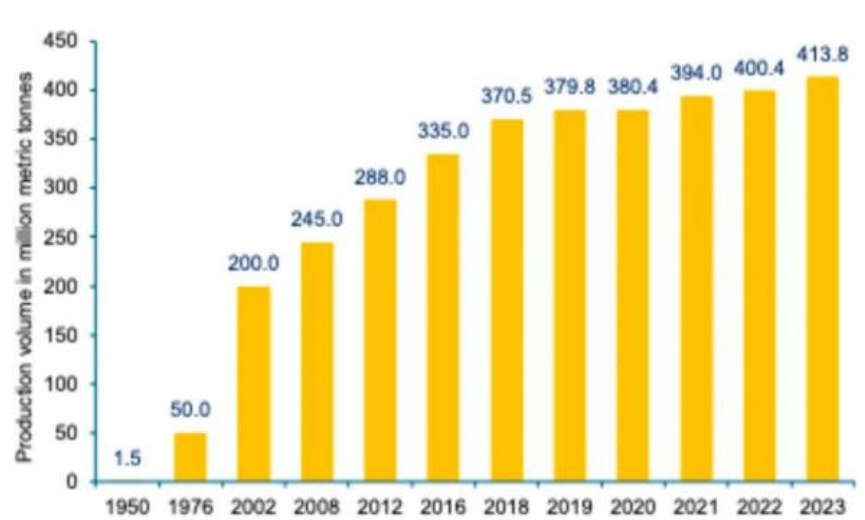
Fig. 0 Global Annual Plastic Production, 1950-2023
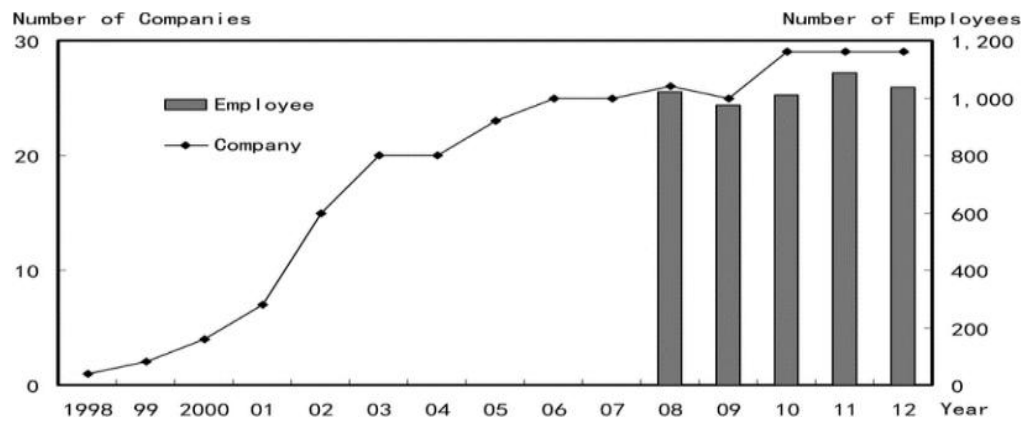
Fig. 1 The number of companies and employees in Kitakyushu Eco-Town (1998-2012)
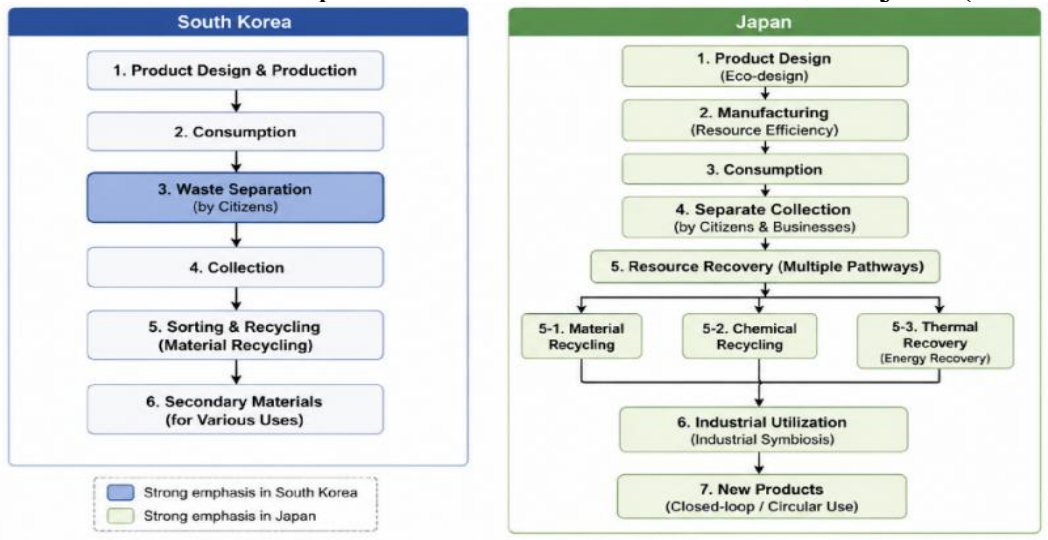
Fig. 2 Comparison of Plastic Resource Circulation Frameworks in South Korea and Japan
References
- Ellen MacArthur Foundation. (2015). Towards a circular economy: Business rationale for an accelerated transition. Ellen MacArthur Foundation. https://ellenmacarthurfoundation.org/
- Greenpeace Korea. (2023). 2023년 플라스틱 대한민국 2.0: 코로나19 시대 이후 플라스틱 소비 추세 분석. https://www.greenpeace.org/korea/
- Korea Environment Corporation. (2023). Waste statistics and recycling management system. Korea Environment Corporation. https://www.keco.or.kr/
- Kitakyushu City. (n.d.). Kitakyushu Eco-Town project. https://www.city.kitakyushu.lg.jp/
- Kitakyushu City Environment Bureau. (2013). Kitakyushu Eco-Town project: History and development. Environment Bureau, Kitakyushu City. https://www.city.kitakyushu.lg.jp/
- Ministry of Economy, Trade and Industry. (2021). Act on promotion of resource circulation for plastics. METI, Japan. https://www.meti.go.jp/english/
- Ministry of Economy, Trade and Industry. (2022, January 14). Cabinet decisions on the Cabinet Order to set the effective date for the Act on Promotion of Resource Circulation for Plastics. https://www.meti.go.jp/english/
- Ministry of Environment, Republic of Korea. (2024). First national circular economy plan (2024–2028). Ministry of Environment, Republic of Korea. https://www.me.go.kr/
- Ministry of the Environment, Japan. (2023). Plastic resource circulation: Japan’s approach to a sustainable society. Ministry of the Environment, Japan. https://www.env.go.jp/en/
- Ministry of the Environment, Japan. (2024). Fundamental plan for establishing a sound material- cycle society. https://www.env.go.jp/en/
- Ministry of the Environment, Republic of Korea. (2023). 2022 National waste generation and treatment status. Ministry of Environment, Republic of Korea. https://www.me.go.kr/
- OECD. (2022). Global plastics outlook: Economic drivers, environmental impacts and policy options. OECD Publishing. https://www.oecd.org/environment/plastics
- Plastic Packaging Recycling Council. (2024). Annual report on plastic recycling in Japan 2024. Plastic Packaging Recycling Council. https://www.pprc.gr.jp/
- Statista. (2024). Global annual plastic production from 1950 to 2023. https://www.statista.com/
- United Nations Environment Programme. (2023). Turning off the tap: How the world can end plastic pollution and create a circular economy. UNEP. https://www.unep.org/